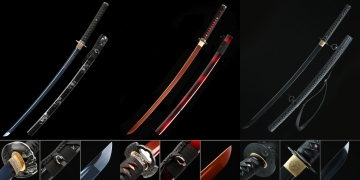
What makes tamahagane different from T10 or Damascus steel?
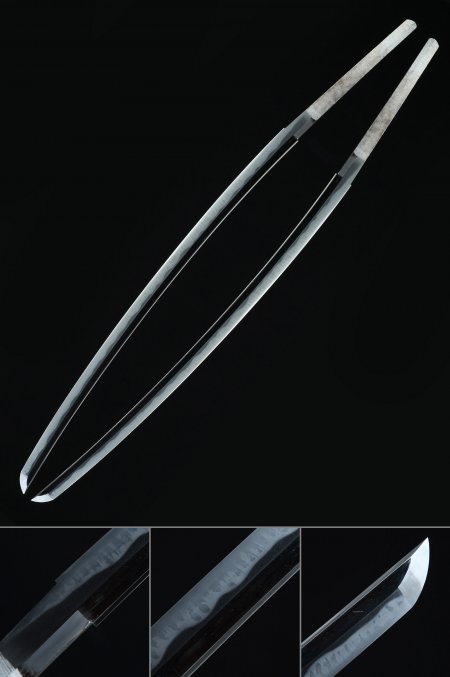
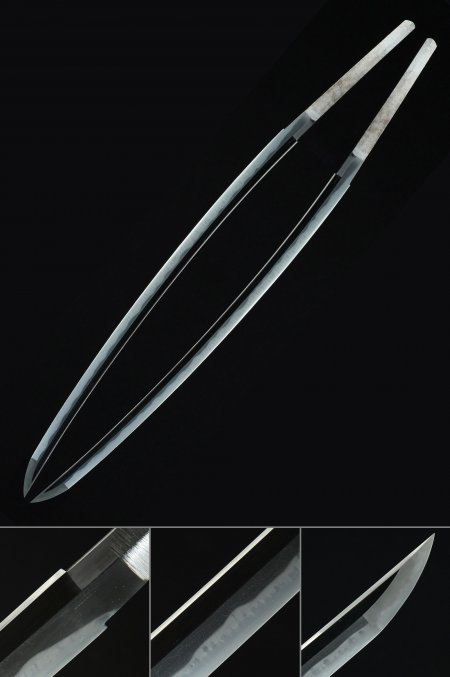
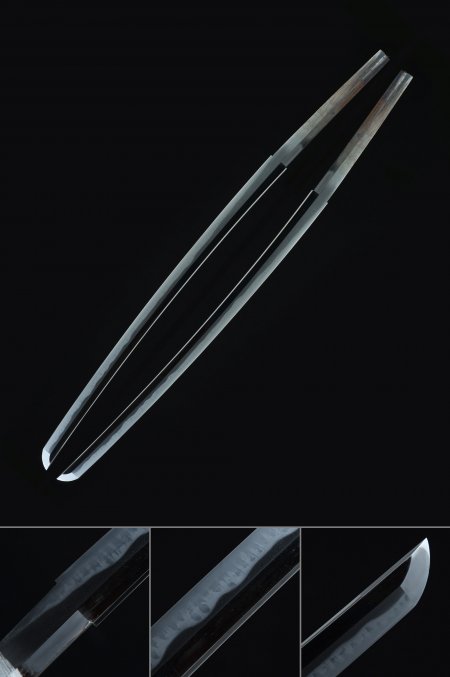
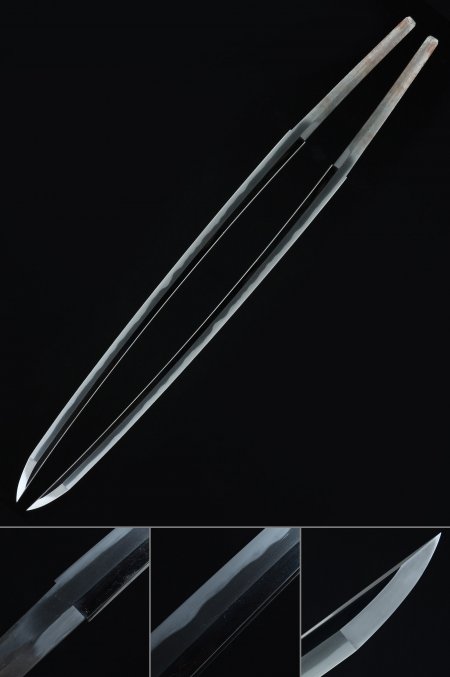
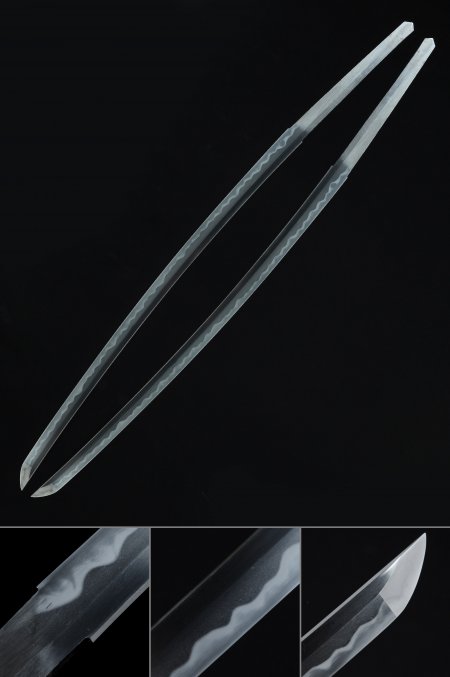
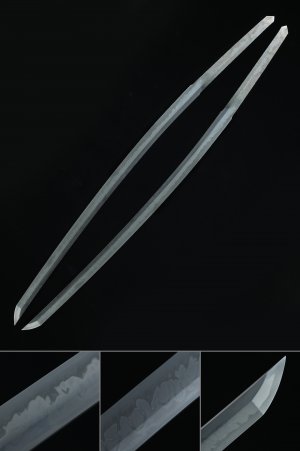
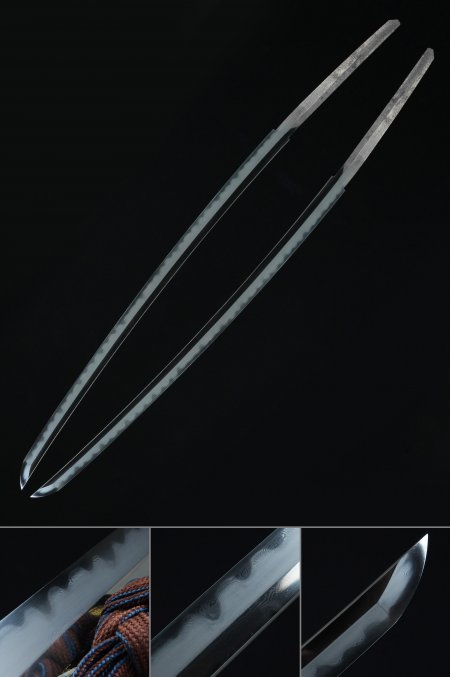
Tamahagane is smelted from iron sand (satetsu) in a traditional tatara clay furnace over several days, producing a steel with a naturally uneven carbon distribution. This inconsistency, which would be a flaw in modern industrial steel, is precisely what creates the jihada - the folded grain pattern visible on the blade surface - and supports a highly active, naturally occurring hamon during clay tempering. T10 is a high-carbon tool steel with about 1.0% carbon and added tungsten for wear resistance; it produces a sharper, cleaner hamon boundary and is generally more consistent in hardness across the edge. Damascus (pattern-welded) steel is fabricated by forge-welding alternating layers of high- and low-carbon steel, then manipulating the billet to reveal a visible surface grain pattern. Each steel type represents a different philosophy: tamahagane prioritizes historical authenticity and surface texture, T10 prioritizes hardness consistency, and Damascus prioritizes visual complexity.
What does 'no holes' on the nakago mean for builders?
A nakago listed as 'no holes' or 'no mekugi-ana' means the tang has been left undrilled at the factory. For custom koshirae builders, this is often preferable because the mekugi-ana (the hole through which the bamboo mekugi peg secures the handle) can be drilled to match the exact position of a hand-fitted tsuka rather than relying on a pre-set factory location. Proper mekugi placement depends on the interior geometry of your specific tsuka core, so starting with an undrilled nakago gives you full control over the fit. This is standard practice in traditional Japanese sword mounting (shirasaya and koshirae fitting) and is considered the correct approach when assembling a display-grade build from individually sourced components.
How do I identify a genuine hamon versus an acid-etched line?
A genuine hamon is formed during the clay-tempering (tsuchioki) process: the blade is coated in clay - thick along the spine, thin near the edge - then heated and quenched in water. The differential cooling creates a true martensite boundary between the hardened edge (ha) and the softer spine (mune). Under a loupe or raking light, a genuine hamon displays interior activity such as nie (bright crystalline spots of martensite visible to the naked eye) and nioi (a misty, cloud-like diffusion). An acid-etched line, by contrast, is a surface-only treatment applied chemically after grinding; it appears as a flat, uniform band with no depth or interior texture. Acid etching does not alter the steel's metallurgical structure. All blades in this collection carry a real clay-tempered hamon, verifiable by examining the transition zone under direct light.
How should I store a bare blade to prevent surface oxidation?
Without a saya to buffer humidity, a bare blade needs more attentive care than a fully mounted sword. Apply a thin, even coat of choji oil (traditional clove-infused mineral oil) or plain food-grade mineral oil across the entire surface, including the nakago if it is unfinished. Use a soft, lint-free cloth and avoid fingerprint contact, as skin oils accelerate surface rust. Wrap the oiled blade in acid-free tissue or a silicone-treated gun cloth, then store it horizontally in a stable, low-humidity environment. Avoid basements or garages with temperature swings. Re-oil every four to six weeks during normal storage, or immediately after any handling. Long-term archival storage benefits from a sealed wooden case with silica gel packets to regulate internal moisture.
Are these blades suitable as display centerpieces without full assembly?
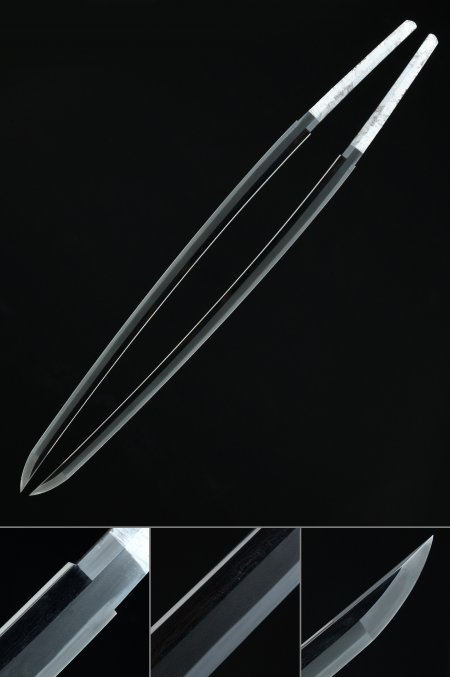
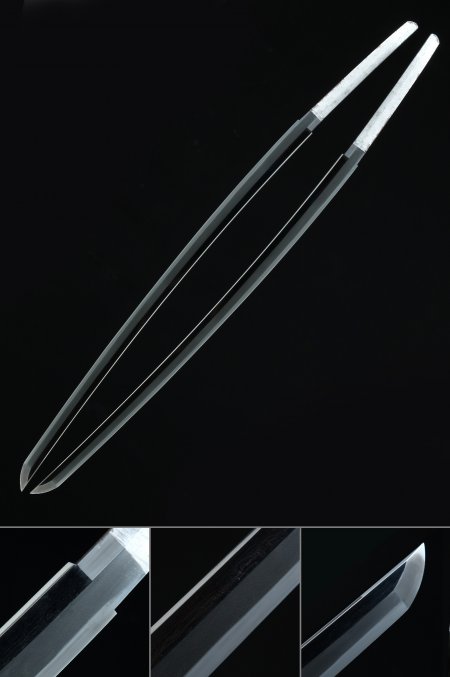
Absolutely. Many collectors display bare blades as standalone objects, using minimalist horizontal blade stands or wall-mounted magnetic rests that cradle the blade along the mune without contact on the polished surface. A bare tamahagane blade with a visible jihada and active hamon is a compelling display object in its own right - the unassembled form actually draws more attention to the blade's geometry and surface character than a fully mounted sword where the tsuka and saya command visual focus. If you prefer a mounted display without committing to a full custom koshirae, a shirasaya (plain wooden handle and scabbard set) is a traditional and archivally appropriate option that protects the blade while keeping the presentation clean and scholarly.