Aikido: The Non-violent Martial Art And Its Philosophy
Aikido, a Japanese martial art, has gained international recognition for its distinctive approach towards conflict – a path of non-violence and harmony. As an intricate blend of physical technique and spiritual philosophy, Aikido provides an intriguing avenue for personal growth and societal peace. In this blog post, we'll delve deeper into the non-violent nature of Aikido and its underlying philosophy.
History and Origins of Aikido
Aikido’s history is deeply interwoven with its founder, Morihei Ueshiba, a martial artist and spiritual leader whose unique vision gave birth to this martial art in the early 20th century. Ueshiba, fondly referred to as O'Sensei (Great Teacher), sought to create a discipline that promoted peace and harmony instead of aggression and competition.
Inspired by his spiritual beliefs and his expertise in various martial arts, Ueshiba crafted Aikido (the way of harmony with the spirit) as a means to neutralize aggression, reconcile conflict, and foster a sense of interconnectedness. Today, Aikido has grown beyond its Japanese roots, reaching a global community of practitioners who resonate with its unique ethos.
Understanding Aikido as a Non-violent Martial Art
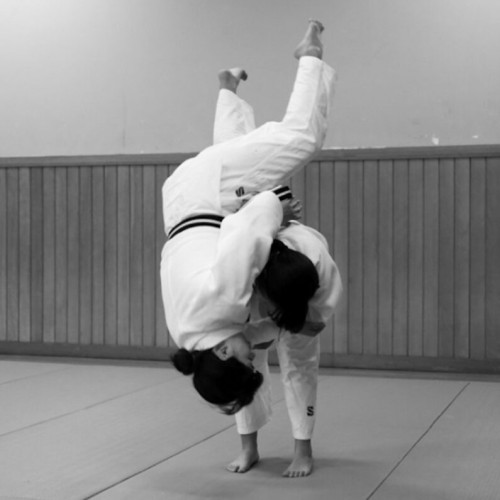
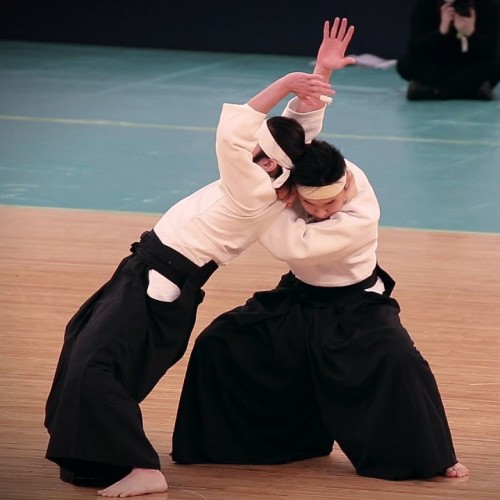
Aikido differs from many martial arts in its non-violent approach. The techniques are designed to neutralize rather than retaliate, redirecting an attacker's force to maintain balance and control. A principle known as "protecting the attacker" underlies this practice, encouraging a non-harmful resolution to conflict. For instance, the "Irimi Nage" technique involves stepping into an attack, blending with the opponent's energy, and redirecting it to unbalance the opponent without causing unnecessary harm. This technique, like many others in Aikido, embodies the martial art's non-violent, harmonious principles.
The Philosophy Behind Aikido
- Fundamental to Aikido is a rich philosophical framework rooted in concepts such as Ki (life force), Aiki (joining energies), and Masakatsu Agatsu (true victory is self-victory).
- Ki represents the vital energy within and around us. Aikido techniques aim to blend with and redirect this energy rather than opposing it head-on. Aiki, or joining energies, signifies the harmonious interaction of forces, manifesting in the smooth, circular movements that characterize Aikido.
- Masakatsu Agatsu, perhaps the most profound of these concepts, conveys that the true conflict lies within oneself. By achieving mastery over our inner conflicts, we can attain a state of peace that radiates outward, influencing our interactions with others.
The Role of Aikido in Modern Society
- In our often divisive and conflict-ridden modern society, Aikido's philosophy of non-violence, harmony, and inner victory holds significant relevance. It provides a unique approach to personal growth, equipping practitioners with skills to handle conflict calmly and effectively.
- On a broader level, the principles of Aikido can inspire more harmonious interpersonal relations, fostering empathy, respect, and peaceful coexistence. For instance, in business negotiations or diplomatic discussions, the Aikido principle of finding a mutually beneficial resolution can be a guiding force.
Learning Aikido – Steps and Recommendations
Interested in embarking on the Aikido journey? Begin by researching local dojos or Aikido schools. Look for qualified instructors who not only demonstrate proficiency in technique but also embody the martial art's philosophical aspects. Online platforms, too, offer introductory courses for those who prefer to start learning from home.
As a beginner, approach Aikido with an open mind. Patience and persistence are essential as the techniques require not just physical training, but also a nuanced understanding of Aikido's core principles. Remember, Aikido is a lifelong journey, not a quick route to self-defense prowess.
Aikido is more than a martial art. Its non-violent approach and profound philosophy make it a tool for personal development and peace-building. From its historical origins to its techniques and philosophy, Aikido offers a path that transcends physical strength, leading towards inner mastery and societal harmony.
As O'Sensei once said, "Aikido is not a technique to fight with or defeat an enemy. It is a way to reconcile the world and make human beings one family." In essence, this reflects the heart of Aikido - a path of peace, harmony, and reconciliation in a world that often seems lacking in these elements. Whether you choose to practice Aikido for physical fitness, self-defense, or spiritual growth, the journey is likely to be a rewarding one.